

Like fish drawn to a lure, guitar solos with flashy techniques are often what people give their attention to. Some people disregard aspects of rhythm guitar completely, prioritizing lead playing when learning the guitar.
The rhythm guitar is an incredibly vital component for any performance, whether it be a band or a solo artist. Without the following guitarists, their associated groups simply would not be as successful.
Table of Contents
James Hetfield
Metallica has been the culprit of some of the greatest metal songs in the genre’s history. They are one of the few legacy bands from the 1980s that are still capitalizing on a worldwide following today.
While Kirk Hammett’s leads are always noteworthy, it’s Hetfield’s rhythm that takes the spotlight. Every Metallica track that is considered iconic is most likely due to Hetfield’s singing and playing.
Izzy Stradlin
Slash might be considered one of the poster children of rock guitar, mostly due to his on-stage persona. Guitar companies and video game franchises have been adamant about cashing in on his image.
But it’s safe to say that Guns N’ Roses might not have been quite as legendary without Izzy Stradlin. He played rhythm guitar during the golden period of the band’s career, performing on the band’s major hits.
Scott Ian
Just about everybody can recognize Scott Ian’s signature bald look complemented by a large goatee. The guitarist for Anthrax has become a sort of enigma in pop culture, proving that rhythm guitar can be cool.
In fact, Ian’s rhythm guitar has seemingly known no bounds throughout his career. He even collaborated with the rap group, Public Enemy, in the early 1990s.
Johnny Ramone
There are likely a few bands that come to mind when pondering the sound of classic punk music. As far as the genre’s sound in America, the Ramones are probably the most commonly thought of.
The Ramones are responsible for crafting some of the greatest punk songs of all time. Johnny Ramone’s seemingly careless approach to the guitar is a major part of the band’s signature sound.
Rudolph Schenker
Throughout the 1970s and 1980s, seeing somebody sporting a Scorpions shirt while walking down the street was commonplace. The German rock group definitely had a unique brand of guitar-driven music that was innovative for its time.
At the heart of the band’s sound is Rudolph Schenker, providing a serious blend of energy and precision. Of course, he’s not opposed to taking a guitar solo every once in a while.
Dave Mustaine
Megadeth might not have ever had the success that Metallica achieved, but they’re successful nonetheless. Some would even venture to say that Megadeth is successful in spite of Metallica.
A huge part of Megadeth’s musical presence is Dave Mustaine’s rhythm guitar chops. His playing is just about as unique as his singing voice, giving Megadeth their signature sound.
Malcolm Young
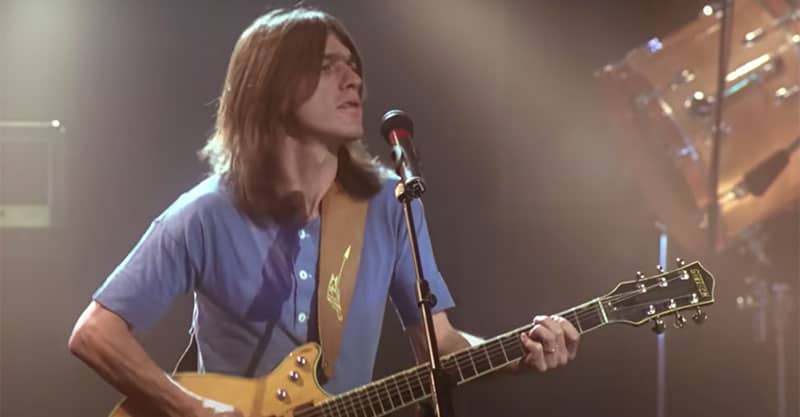
Much has been said about AC/DC over the years, whether it be critical praise or criticisms of simplicity. And while many of their tracks seem formulaic in nature, it doesn’t delude their effectiveness by any means.
Most young players look to Angus Young’s lead playing as a source of inspiration. What they don’t realize is that the real musical magic allowing it to happen is Malcolm Young’s rhythm guitar playing.
Paul Jackson Jr.
You might be scratching your head and wondering just who Paul Jackson Jr. might be. He definitely didn’t serve a long career in a rock/metal band like many of the names on this list.
Paul Jackson Jr. contributed rhythm guitar to some of the greatest songs and albums ever recorded. A few of the artists he worked with include Michael Jackson, George Benson, Joan Baez, and Whitney Houston.
Tom Morello
Some people might find an issue with seeing Tom Morello being mentioned as a rhythm guitar player. After all, it is a little difficult to box in and define his playing as being either rhythm or lead.
In some ways, Morello reinvented the rhythm guitar by means of guitar pedal experimentation, often manipulating effects for rhythmic purposes. This approach to the guitar is a huge part of Rage Against The Machine’s signature sound.
Jimi Hendrix
Mentioning Jimi Hendrix as a rhythm guitarist is likely to be triggering for some folks. He’s another guitarist who is often viewed primarily as a lead guitarist.
But anyone with attentive ears can hear that Hendrix actually blends rhythm and lead playing into one approach. Take a listen to Purple Haze and ask yourself if his rhythm playing isn’t important.
Chuck Berry
If Chuck Berry is the founder of rock and roll, then he definitely deserves some recognition and acknowledgment. While Chuck’s lead playing is what usually draws the most attention, his rhythm skills require another listen.
In some ways, Chuck Berry laid the foundation for different rhythm techniques that would become commonplace thereafter. His superb mastery over rhythm playing allowed him to accompany his vocal delivery.
Pete Townshend
British rock music from the late 1960s and 1970s is usually defined in part by large guitar chords. One of the guitarists responsible for this is Pete Townshend, from the band, The Who.
Townshend’s playing focused specifically on rhythm playing rather than resorting to flashy techniques. Plus, he practically invented the expressive windmill picking attack that is so synonymous with his playing.
Bob Weir
Unless you’re familiar with the Grateful Dead, Bob Weir is a name you probably don’t recognize. Most people are more familiar with Jerry Garcia but fail to realize the importance of Weir’s musical role.
Sure, Garcia may have led the group into uncharted sonic territories. But Bob Weir was a facilitator, often helping to make sense of what would otherwise be fairly incomprehensible.
Django Reinhardt
Yes, everybody knows that Django Reinhardt possessed guitar skills that could make anyone rage quit the guitar. He did more with 2 fingers than people spend an entire lifetime attempting to achieve with 4.
While his melodic leads are often the star of the show, Django’s rhythm playing is just as good. When people learn how to play gypsy jazz, they often start by studying his comping techniques.
Brendan Bayliss
Brendan Bayliss is a name you might not be familiar with unless you’re immersed in the jam band world. He plays in the band, Umphrey’s McGee, blending genres of metal, progressive rock, and funk into one package.
Umphrey’s McGee relies on a 2-guitar attack with Bayliss and Jake Cunninger (a virtuoso in his own right). While Bayliss does play some leads, he primarily helps to steer improvised jams while playing rhythm guitar.
Nile Rodgers
If you’re feeling like having a party where everyone is certain to start dancing, what would you play? Chances are that you’d probably at least have the famous Chic song, Good Times, on a playlist.
A huge part of that song’s potency is just how effective and crisply clean the rhythm guitar track sounds. That would be Nile Rodgers, who literally made a name for himself by primarily playing rhythm guitar.
Cory Wong

Wondering who to keep an eye on in today’s modern world of rhythm guitar players? Cory Wong is somebody that should be at the top of your list.
Wong made his great come-up with the funk band, Vulfpeck. Since then, he’s been touring nonstop, illustrating just how fun and amazing rhythm guitar can be when done correctly.
Stevie Ray Vaughan
You’re probably laughing out loud seeing Stevie Ray Vaughan’s name listed here. But, like Hendrix, SRV is a maverick and seamlessly combines lead and rhythm parts together as one.
Let’s face it, songs like Pride And Joy wouldn’t exist had SRV not possessed the rhythm guitar skills required. It’s a track that gives even seasoned rhythm players a bit of sticky trouble.
Billy Gibbons
How many times have you put on ZZ Top’s La Grange and not been immediately enamored with the rhythm guitar? It’s almost physically impossible not to get pumped listening to Billy Gibbons’s playing.
Playing in a power trio is no small feat, no matter what genre of music you play. Billy Gibbons has the magic touch when it comes to both lead and rhythm guitar skills.
Redd Volkaert
Unless you’re an absolute guitar nut, Redd Volkaert might have missed your radar completely. Redd is the personification of a working musician and served as the late Merle Haggard’s touring guitarist.
While much of his playing is rooted in country music stylings, Redd’s technique goes far beyond. It’s not uncommon to hear him build complex chord melodies mixed in with extremely smooth double-stops along the entire neck.
David Crosby
Much has been said over the years about David Crosby’s innate talent for providing perfected vocal harmonies. Such an attribute played a critical role in CSNY’s historical releases.
But, what often gets overlooked is Crosby’s rhythm guitar skills underneath all of the vocal harmonies. Being able to play and sing in such a manner earns him the title of one of the best.
Bob Dylan
Bob Dylan has been frequently mentioned as one of the greatest songwriters of the 20th century. Songwriters from all genres and walks of life look to Dylan’s work as a source of inspiration.
While Dylan’s lyricism often takes the cake, guitarists would do well to study his rhythm guitar playing, too. The way Dylan plays the guitar is integral in ensuring that the lyrics hit with the potency they do.
Glenn Frey
The Eagles are one of the most celebrated rock groups still enjoying worldwide success beyond the 1970s. It seems as if people just cannot get enough of the multi-guitar attack often featured in their music.
Glenn Frey is a key component of the Eagles and their sound, and not just because of his songwriting skills. Somebody needs to play the rhythm parts to provide harmonic context for the weaving of multiple, simultaneous guitar leads.
Tom Fogerty
Creedence Clearwater Revival has one of the most distinct sounds that a band could ask for. Within seconds, just about anybody can recognize the band from their swampy delivery.
Most people associate CCR with John Fogerty and his very unique voice. But what they don’t realize is that Tom Fogerty was an essential component in generating that signature swampy guitar tone.
Brian Jones
It’s almost criminal that today’s younger generations (who are familiar with the Rolling Stones) are unaware of Brian Jones. What most people fail to realize is that Jones was actually the founder and bandleader back in the late 1960s.
Many of the band’s early hits are a direct result of Jones’s influence on the band. To this day, his death remains a mystery that isn’t any closer to being solved.
Ronnie Wood
Ronnie Wood is another musician known best for his association with the Rolling Stones through the late 1970s and beyond. Before the Stones, Wood made a name for himself playing alongside Rod Stewart in the band, Faces.
What makes Ronnie Wood so spectacular is that he is not afraid of being a musical utility man. While playing rhythm guitar, he often trades licks with Keith Richards and sometimes plays other instruments as needed, too.
Keith Richards
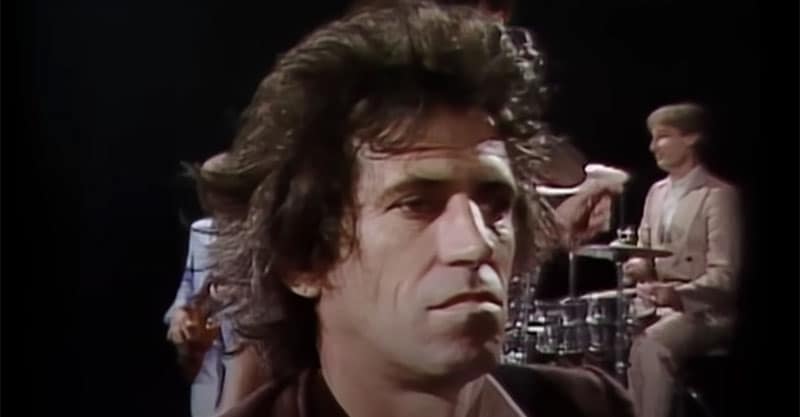
The common collective imagery of the Rolling Stones tends to feature singer, Mick Jagger and guitarist, Keith Richards. While he’s often credited as a lead guitarist, Keith holds his own when it comes to rhythm guitar duties.
In fact, his rhythm guitar playing has spawned some of the most unforgettable tracks from the 20th century. It’s his approach to bar-room blues-rock that gives the band its signature sound.
Thom Yorke
Casual Radiohead fans probably wouldn’t think of Thom Yorke as being a rhythm guitarist. But, watching any of the band’s live performances would provide a shocking case for his artistry.
Thom’s rhythm playing has played a vital role in many of Radiohead’s more recent tracks. Try learning some of these songs for yourself and you’ll see that he’s definitely not a hack on the guitar.
Ed O’Brien
Ed O’Brien probably isn’t the first person you’d think of when it comes to Radiohead and their sound. Many words have been spent in praise of Yorke’s vocals and Greenwood’s experimental compositional approaches.
There’s no denying that both Greenwood and Yorke are integral to Radiohead’s music. But what often gets overlooked is Ed O’Brien’s insane consistency when holding down rhythm guitar duties.
More often than not, it’s him playing the guitar when Yorke is focused on singing and Greenwood is crafting ambience. To do it with such precision and also simultaneously provide backup vocals is deserving of its own praise.
Danny Whitten
Neil Young’s earliest solo records are known for having some deep-cut tracks ripe with guitar solos galore. Try applying a critical ear to the rhythm guitar parts of Down By The River, or Cowgirl In The Sand.
What you’ll hear is Danny Whitten’s rhythm guitar staying within its own designated musical lane without embellishing. Though his career was cut short by addiction, Whitten’s playing on these tracks are fundamental rhythm guitar examples worth studying.
Joe Strummer
British punk music had its own unique timeline of influences and sounds, with The Clash being at the forefront. The Clash was known for infusing hints of reggae into their brand of punk, fueled by Joe Strummer’s playing.
Take a listen to any of their songs and you’ll immediately hear the importance that rhythm played in their sound. Joe Strummer’s rhythm guitar playing really was as large and iconic as his unforgettable singing voice.
Paul Stanley
If there’s 1 person that could make rhythm guitar cool, it’d have to be Paul Stanley. The Starchild of KISS is unforgettable with his signature makeup, huge voice, and lively on-stage persona.
Many of KISS’s songs feature a super tight rhythm section to elevate guitar solos. Along the way, Paul Stanley has created some timeless riffs that are worthy of the history books.
Tom Petty
Tom Petty is best known for his use of simplicity regarding the foundation of many of his songs. Take the song, Free Fallin’, for instance, which centers around one basic progression any beginner could play.
Milking the chord melody in a consistent way provides the proper vehicle for Petty to deliver his message. In some ways, Petty was a folk musician playing rock music.
Dave Matthews
When it comes to the acoustic guitar, Dave Matthews is an absolute giant to be feared and respected. While his music attracts all walks of life, he generally doesn’t get the credit he deserves.
Dave plays far beyond the simplistic chord patterns everybody else plays. He infuses energy into his rhythm to liven up his delivery while also providing excellent accompaniment during solos.
John Lennon
If The Beatles are to be one of the greatest groups of all time, John Lennon deserves a mention. After all, The Beatles created some of the finest music known to man, with Lennon playing rhythm on most songs.
It’s his rhythm guitar chops that allow George Harrison to add in his sweet little pleasures. Whether it be Don’t Let Me Down or I’ve Just Seen A Face, it’s Lennon playing more often than not.
Best Rhythm Guitarists, Final Thoughts
It’s a fair deal more difficult to maintain a consistent rhythm and not deviate outside of the simplest idea. The human mind likes to embellish as it goes on, but sometimes this can be unnecessary for good music.
Many of the most historic guitar soloists would not have their names without a solid rhythm player behind them. Rhythm guitarists really are the unsung heroes of music, steering the ship and maintaining musical balance during the deepest jams.
Side note, do you want to learn to play guitar songs the easy way? Learn how here – results are guaranteed!